“You will never amount to anything.”
“Useless.”
These words have been etched into my mind since I was very young.
Difficulty breathing, chewing, swallowing, and speaking are just some of the symptoms I experience every day. Because of these, there came a time when I almost believed them—that maybe this was all life had for me, that this would be the life I was destined to live.
My name is Devi, the eldest of two siblings. My childhood was happy. There were four of us in the family—my father, my mother, my younger brother, and me. We lived in a small and simple house in the town of Bato, Camarines Sur, in the Philippines. I played freely, as if tomorrow did not exist. But in a single moment, everything changed.
My mother fell ill. My father did everything he could to help her recover, but sadly, she did not survive. I lost my mother at the age of nine.
At such a young age, fate tested me. I was left with responsibilities far beyond my years—not only as a sister, but also as a mother—to my six-year-old brother, while my father buried himself in work to provide for us and to ease the pain of losing my mother. We tried to live a normal life, even though it would never be the same again.
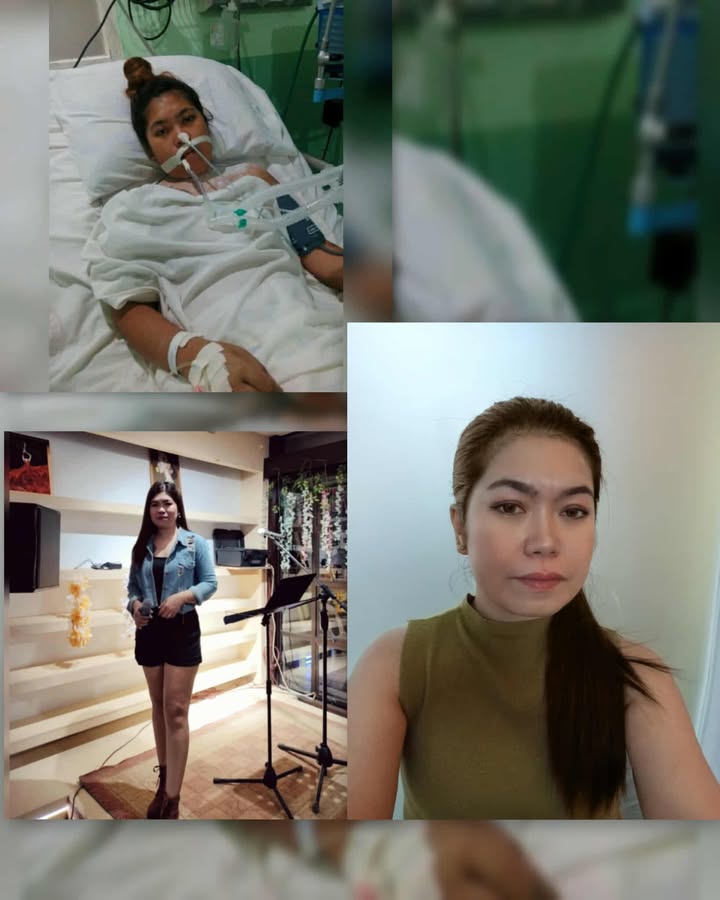
When I reached adolescence—13 years old, to be exact—I began to feel that something was wrong with my body. I experienced severe fatigue, weakness, and frequent episodes where my knees would suddenly give out, causing me to collapse. At first, I thought it was normal. But as time passed, my symptoms worsened: drooping eyelids, double vision, difficulty swallowing, and difficulty speaking. Eventually, I could no longer walk or speak at all.
“Why, Lord? Why me? What did I do to deserve this?”
These were the questions I could never find answers to.
I lost the will to live. My insecurities grew. I envied people my age who lived normal lives—going to school, having friends, living freely. Meanwhile, I was bedridden, unable to move, unable to eat on my own, unable to speak.
In simple terms, I became disabled.
My family did everything they could to help me recover or at least find out what illness I had. But due to financial limitations and old beliefs, I was often taken to faith healers instead of proper medical care.
Eventually, I gave up on treatment altogether. There came a time when even my family nearly accepted my condition, waiting for the day my life would end.
For four years, I was bedridden.
One day, as my condition became critical, I was finally brought to the hospital. There, I met the man who changed everything—Dr. Elgar. At the age of 17, I was finally diagnosed with myasthenia gravis. He prescribed Mestinon (pyridostigmine), and in an instant, I regained strength and was able to speak again.
The joy my family felt was indescribable—mixed with sadness, because we learned that my illness has no cure.
From that day on, hope returned to my heart. I accepted my condition and educated myself about it, even while hearing people say things like, “You will never achieve anything in life.” I treated that day as my second life, a gift I refused to waste.
I joined a support group in the Philippines, where I learned more about my condition and met people who truly understood me. Slowly, my life returned to something close to normal.
I believe we cannot take back the years we lost, but we can always move forward. I finished my education through the Alternative Learning System and returned to my first love—singing. I refused to let my condition stop me from pursuing the dreams that were once put on hold.
Life is still not easy. Until today, I continue to take maintenance medications, attend regular check-ups, and face days of physical and emotional struggle. I loved and lost, but I was blessed with a child, whom I now raise on my own with all the strength I have.
Today, I stand not as someone defined by illness, but as someone shaped by resilience. Myasthenia gravis may be part of my story, but it will never be the end of it. I am more than my weakness, more than the words spoken against me, and more than the pain I endured.
To anyone who feels broken, forgotten, or defeated—remember this: we are bigger than our problems. Acceptance and adaptability are not signs of surrender; they are acts of strength.
A diagnosis is not a death sentence. A setback is not the end of the road. As long as we are breathing, there is purpose. And as long as we keep believing, the Creator is still writing a beautiful plan for our lives.