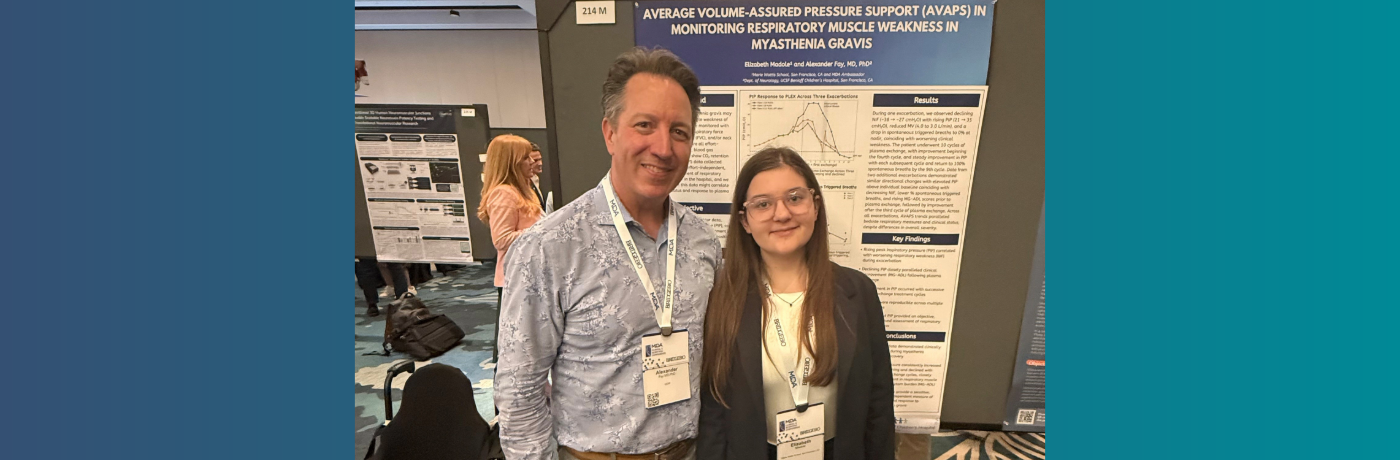
At just 12 years old, Elizabeth Madole is already helping shape the future of myasthenia gravis care.
She lives with AChR antibody–positive generalized MG, a rare autoimmune disease that causes muscle weakness and can affect breathing, swallowing, and mobility. From a young age, her symptoms were severe, including life-threatening episodes.
She has experienced what many MG patients know well: when she struggles to breathe, it’s not always evident to her care team.
This can be a serious issue, especially during an MG flare, when patients usually receive treatment to stop the exacerbation before it requires intubation. How do providers know for sure that a patient is responding?
While clinicians have objective ways to measure respiratory muscle strength, these measures can be underused or influenced by patient effort. Clinicians who are not familiar with MG might use blood gas data, which is not a reliable indicator of breathing difficulties in MG patients until a crisis is under way.
After years of hospitalizations and relying on breathing support at home, Elizabeth has had many opportunities to watch the numbers on her ventilator monitor rise and fall. She started analyzing the data, identifying patterns during disease flares that signaled when she wasn’t responding to treatment, even when oxygen levels looked stable.
Those insights led to a collaboration with her neurologist, Dr. Alex Fay, on a case study using Elizabeth’s own data. They found that peak inspiratory pressure, or PIP, consistently increased when her symptoms worsened and declined after treatment began to improve Elizabeth’s muscle strength.
Elizabeth and Dr. Fay presented their paper at the MDA’s research conference this March and hope to attend future medical conferences.
Elizabeth’s goal is simple: prevent other patients from reaching crisis points. She and Dr. Fay hope their research encourages clinicians to better incorporate this metric into MG care.
To hear directly from Elizabeth and Dr. Fay, including deeper insights into her journey and into the research, listen to the Our MG Voice podcast episode: https://open.spotify.com/episode/2GvcSz92mP8Wu1qLsBXqgO